Bleeding is the loss of blood from blood vessel via a wound and can be divided into two main categories: external or internal bleeding. Severe bleeding combined with shock is a potentially life- threatening situation if it remains untreated. In this article we will introducing the type of bleeding and first aid treatment.
Type of bleeding
Internal bleeding- is the escape of blood from arteries, veins or capillaries into spaces in the body. Example causes of internal bleeding: violent blunt forces, such as car crash or fall from height.
External bleeding – it occurs when a blood vessel is opened externally, such as through a tear in a skin. Example causes of external bleeding: opening of the wound such as abrasion, incision, laceration wound and etc.
First aid treatment external bleeding
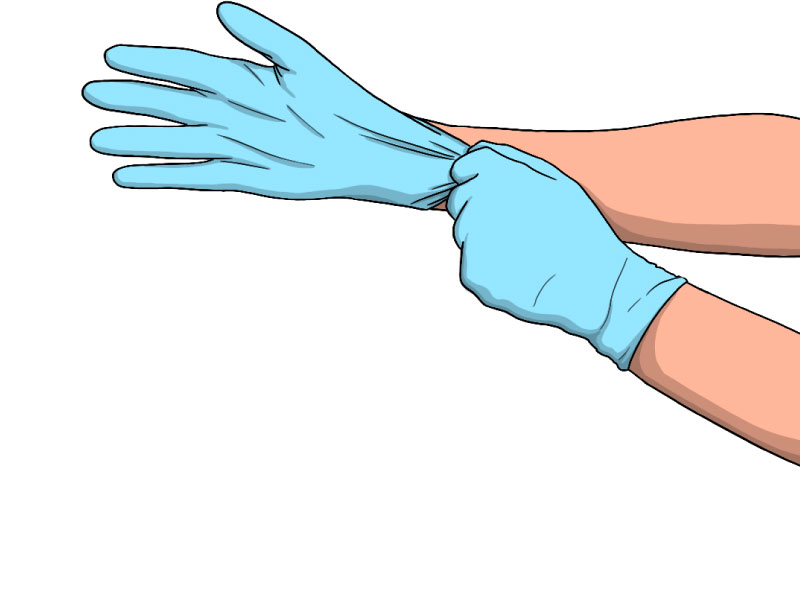
Wear on glove when handling of human’s body fluid to avoid cross infection.
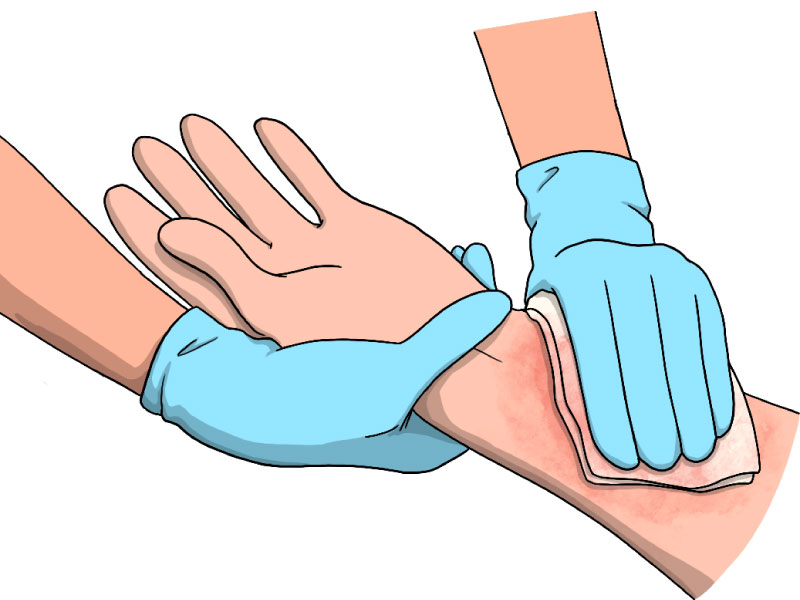
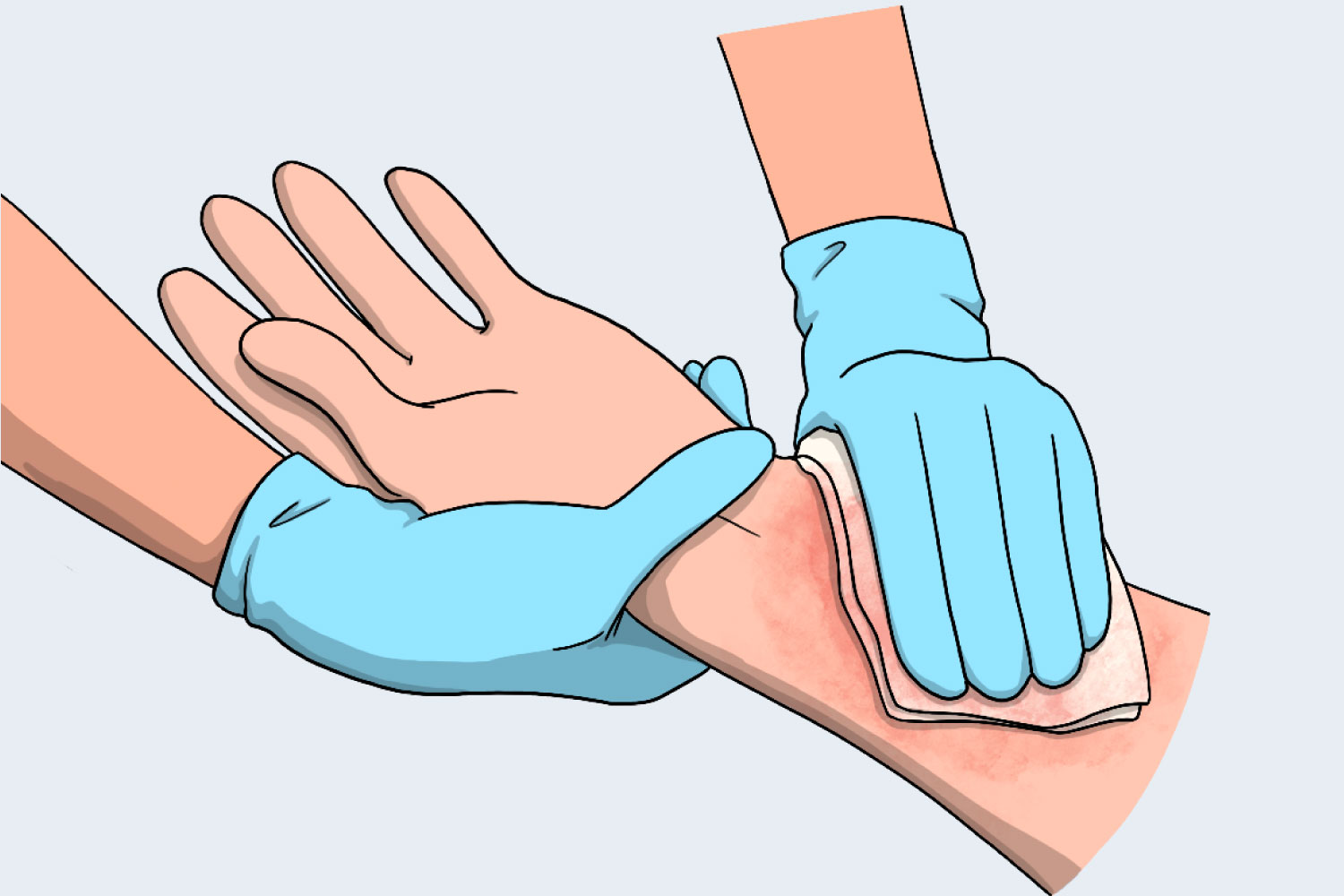
Apply direct pressure on external wound with sterile dressing/ clean cloth /your hand, maintain pressure until bleeding is stop.
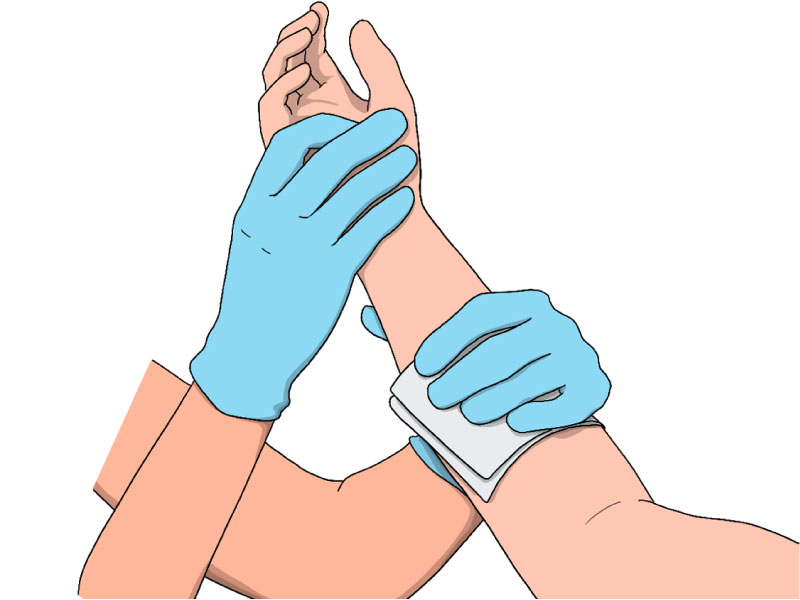
If you do not suspect a broken bone, elevate the injured area above the level of the heart and let the person rest in a comfortable position.
Immobilize the bleeding part, apply pressure bandage to hold the gauze pad or cloth in place
If bleeding continue through or around the bandage, leave the initial bandage and pad in place and apply a second pad and firmer bandage on top of the first.
Do not disturb the dressing once bleeding is controlled.
Continue monitor the person’s airway and vital signs. Call 999 for an ambulance if necessary. Observe the person closely for signs of shock or any other indication of a deteriorating condition.
Periodically check the circulation beyond the bandage to make sure it is not too tight.
Wear Glove
To avoid cross infection.
Apply Direct Pressure
Onto wound using sterile dressing/clean cloth/own hand.
Stay Immobilize
Immobilize the area and elevate above the heart if possible