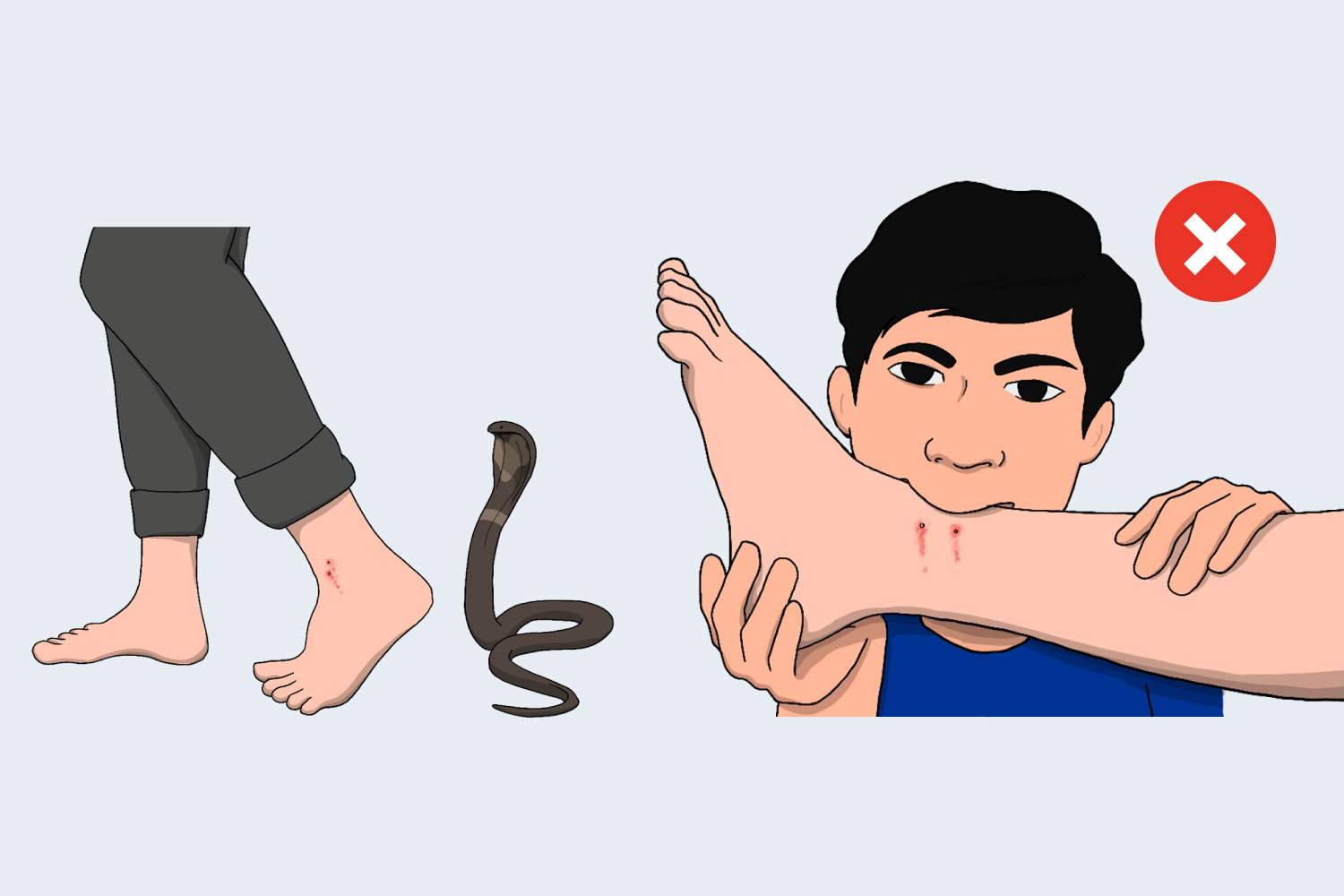
Insect and animal stings and bites are among the most common sources of injected poisons.
These bites and stings can be serious when they involve envenomation, it is the process which venom is injected by the bite or sting of a venomous animal.
Signs and Symptoms of poisonous snake bites some may occur rapidly while others may occur in later stage
Local pain, swelling, discoloration at the bite site
Paired or single fang marks in the skin
Nausea, vomiting
Headache
Altered conscious state
Double vision or blurred vision
Problems with speaking and/or swallowing
Weakness in extremities and/or paralysis
Respiratory distress or sudden cardiac arrest
Clotting defects
General First aid guidelines for snake bite:
Stay calm.
Call for Medical Assistance 999 for an ambulance.
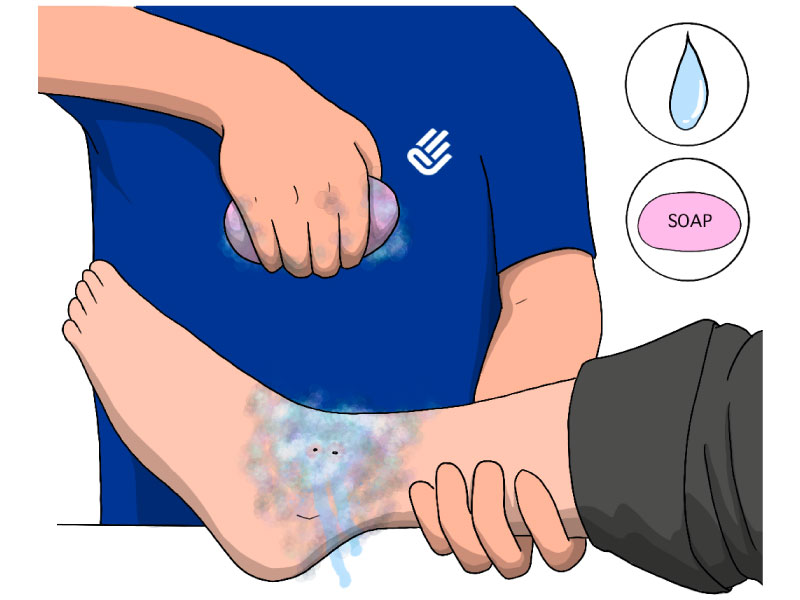
Wash the site of bite quickly and carefully if possible.
Wash eyes immediately with plenty amount of water if the venom sprayed in the eyes.
Apply the pressure immobilization technique for a bite on a limb only not for the bite on the head or trunk.
Use clean cloth to compress if bleeding occur.
Keep the person calm, reassured and at total rest. Do not elevate the affected limb.
Continually monitor the circulation, airway and breathing, start CPR if needed.
Try to remember the snake’s description or take picture of the snake using camera/handphone if possible.
Pressure immobilization technique
Apply firm pressure over the bite site, using your hand if necessary.
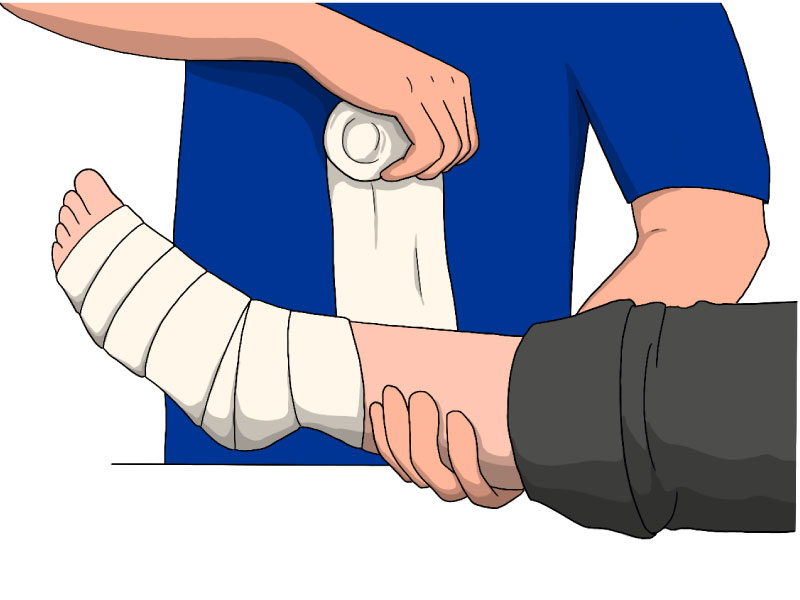
Apply an elasticized roller bandage which should be 10cm to 15cm wide, or improvised material that can be torn into strips 7cm to 10cm wide, and exert firm pressure over the bite area.
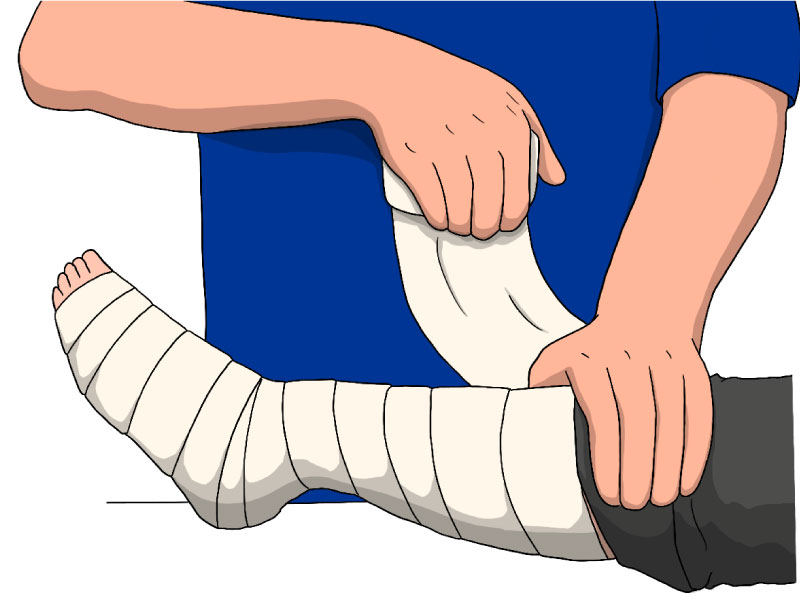
For a bite on the leg or arm, apply a further elasticized bandage starting at the finger tips or toes of the injured limb and bandage upwards to try to cover as much of the limb as possible. This second bandage helps to further restrict the lymphatic circulation and spread of the venom.
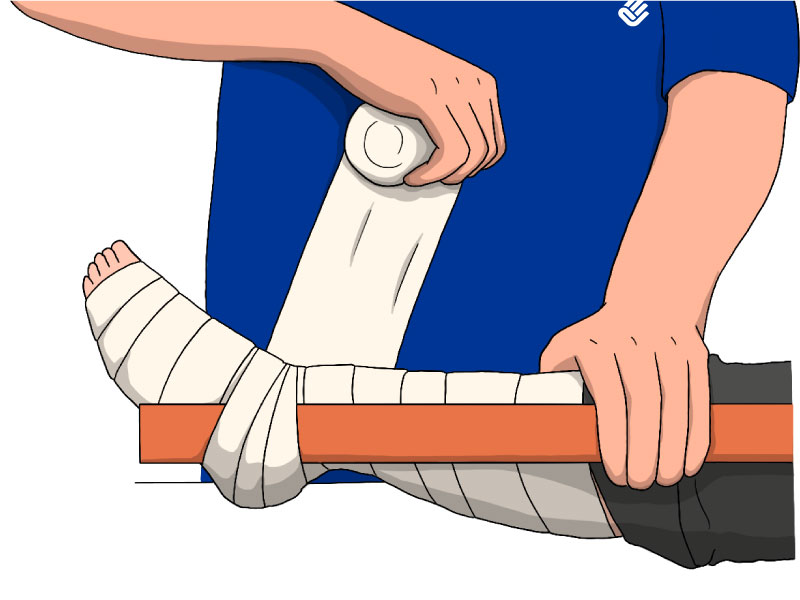
Immobilize the affected limb with a splint to reduce muscle movement. Help the person to rest if possible and do not let the person to stand or walk. Bring transport to the person, unless this will cause a delay of 2 hours or more.
Do not remove the bandages or splints until the person has reached medical care and only if you are instructed to do so.
If the bandage is applied too tightly, circulation may be cut off below it. Signs of impaired circulation are discoloration of the fingers or toes below the bandage or the person complaining of sensation of coldness or numbness. If any of these signs and symptoms occur, loosen the bandage sufficiently to let blood flow return.
Most bite occur on a lower limb, usually around the ankle. For bites on the head or trunk, do not try to use the pressure immobilization technique but help the person to rest completely until medical assistance is arrived.
Immediate Pressure Application
Apply a broad pressure bandage from below upwards and over the bite site as soon as possible. Keep the bitten limb still.
Firm Compression
Apply the bandage firmly, similar to the pressure used for a sprained ankle. Avoid unnecessary movement.
Full Limb Coverage
Extend the bandage as high up the limb as possible.
Limb Immobilisation
Apply a splint to immobilise joints above and below the bite site.
Secure and Restrict Movement
Bind the splint firmly along the limb and restrict walking or movement.
Upper Limb Support (If Applicable)
For bites on the hand or forearm, immobilise up to the elbow and support the limb with a sling.
How to avoid get bitten by snake?
Wear shoes that cover your feet and long pants when walking through grass or undergrowth.
Make thumping noises with feet when walking in the dark or bushes (create vibration).
Do not attempt to put hands down into unknown dark holes, dark cavities or cracks in the rocks.
Keep clear of dead snakes as people have been bitten 2 or 3 times by “dead” snakes.
Avoid going to a snake area when it is dark.
Seek For Help
Call for 999
Wash
Wash the affected side
Stay Immobilize
Immobilize the affected limb
Keep Calm
Keep the person calm
Do's
Call for 999 for an ambulance
Wash the site of bite quickly
Apply the pressure immobilization technique for a bite on a limb
Keep the person calm, monitor the circulation, airway and breathing, start CPR if needed
Dont's
Do not try to suck out the venom
Do not apply ice or immerse the wound in water
Do not apply a tourniquet
Do not cut the wound with a knife
Do not wait for the symptoms to occur and get medical treatment immediately